

Buying
Will Farm Noise Wake Me Up? Brentwood's Right to Farm Rule
Buy within 2,000 feet of Brentwood farmland and you'll sign a form accepting 5 a.m. tractors, dust, and spraying as normal — permanently.
A tractor two hundred yards from your bedroom window starts around five in the morning in June. If the farm was there before the house was, nobody has to stop.
That's what the Right to Farm disclosure is telling you.
If a Brentwood home sits within 2,000 feet of farmland, the seller has to deliver a Right to Farm disclosure at least five days before closing. Signing means you accept the noise, dust, odors, and round-the-clock machinery as normal — not as something you can sue over later.
Does this apply to the house I'm looking at?
Two thousand feet is a little over a third of a mile, and it reaches further into town than most buyers expect.
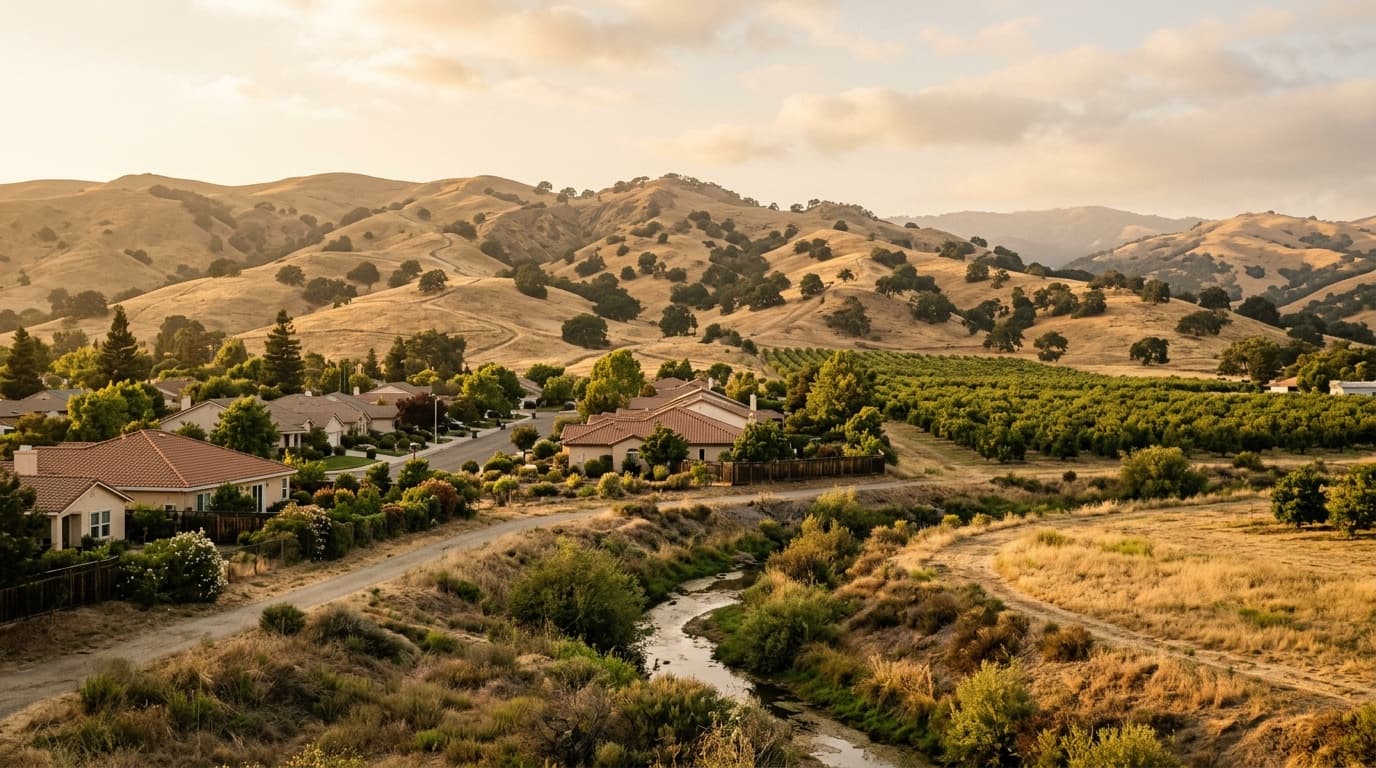
Brentwood farms 11,000 acres, and the orchards and row crops are threaded between neighborhoods rather than pushed out to the edges. Plenty of homes five minutes from a coffee shop still land inside that radius.
You can't eyeball it. It's measured from the farmland to the property being sold, so two houses on the same street can land on opposite sides of the line. I pull the parcel and look at what's next door before I write an offer — not three days before you sign loan docs.
What you're agreeing to
The form lists it plainly: noise, odors, fumes, dust, smoke, insects, machinery running at any hour — including aircraft — manure storage and disposal, and the spraying of fertilizers, herbicides, and pesticides.
Then it asks you to accept those as a normal and necessary part of living in a city with a strong rural character. The city is telling you in writing, before you own the house, what your mornings may sound and smell like in June and again in September.
The rule underneath it's simple. If the farm was there first, was operating properly, and wasn't a nuisance when it started, it doesn't become one because houses showed up next door. The ordinance also says farm vehicles moving slower than traffic aren't a nuisance — worth remembering the next time you're behind one on Sellers Avenue.
Can I do anything if it goes too far?
There's a real path, and it doesn't start with a lawsuit.
Start with a letter. Notify the operator in writing about what's happening. The ordinance encourages a conversation alongside it.
Then the grievance committee. If that doesn't settle it, both sides can agree to bring it to the committee run through the County Agricultural Commissioner. Both sides — it isn't something one party can impose. You have 30 days after that first letter to submit in writing. The committee meets within 30 days and issues a decision within 20 days after that.
Know what you're getting. The decision is advisory. It carries weight, but nobody is required to follow it. If that doesn't work, both parties can agree to arbitration.
What the farmland does for you
Send me the address before you fall in love with the house. I'll pull the parcel, tell you whether this disclosure is coming, and tell you what's growing next door.
(925) 200-0717 — I'll take the call myself, and I'd rather have this conversation before you write the offer than after the first June you spend here.
Ordinance provisions and disclosure requirements change — confirm the current rules for a specific property before you rely on them. This post is general information, not legal advice.
Margie Lupo, Broker Associate, SRES® · eXp Realty of Northern California, Inc. · DRE #01193496 · Brokerage DRE #02188495 · Equal Housing Opportunity
Sources
- Brentwood Municipal Code, Chapter 8.01 — Right to Farm (Ord. 612, 1999) — nuisance protection, the 2,000-foot disclosure requirement and five-day deadline, refusal declarations, the grievance procedure and its timelines, arbitration, and agricultural buffers. Accessed August 2026.
- California Civil Code § 1102.6a — the state law letting a city require its own disclosure form. Accessed August 2026.
- City of Brentwood, Agritourism — Agricultural Core acreage, conservation easements, U-Pick Capital designation, visitor counts, and the Contra Costa AVA. Accessed August 2026.
Frequently asked questions
Does this apply to Trilogy at the Vineyards?
It depends on the parcel, not the community. The 2,000 feet is measured to the individual property, so two homes in the same neighborhood can land differently. Send me the address and I'll check it.
When should it show up?
As soon as practical after your offer, and no later than five days before title transfers. It belongs with the rest of the disclosure package early in escrow — not at signing.
Is this the same as the standard California disclosures?
No. The Transfer Disclosure Statement, Natural Hazard Disclosure, and Seller Property Questionnaire are required statewide. This is a Brentwood form on top of those.
Can the city require more than a disclosure?
Yes. New developments next to farmland can be required to include a buffer or transition area, decided case by case.
What about new construction?
Same protection, different route. Builders get a condition on their approvals requiring the disclosure to be recorded, and once recorded it stays with the land.
Keep reading
Other guides from this desk


Have questions about Brentwood real estate?
Let's talk about your next move. I'll get back to you personally. Coffee in Downtown Brentwood works too.
I answer my own phone, seven days a week.